Ornamental pruning
Crape myrtles and tree-form shrubs, pruned without topping
Structural pruning for crape myrtles and other large shrubs grown as small trees. The aim is clean trunks, an open canopy and a natural outline, reached with a handful of well-placed cuts rather than a row of stubs.
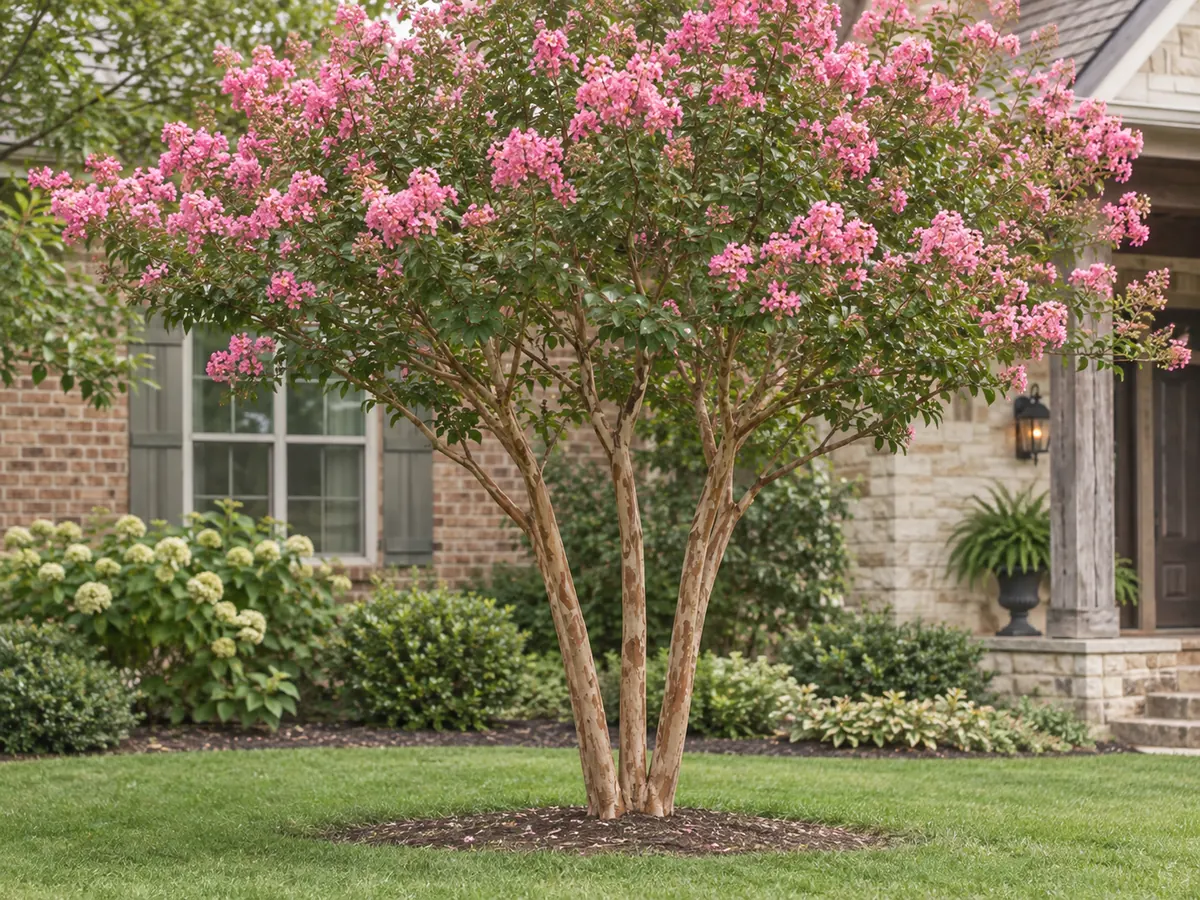
What is included
- Selection of the strongest trunks on multi-stem plants
- Lower limbs removed to lift the canopy and show the bark
- Crossing, rubbing and inward-growing branches taken out
- Suckers at the base and sprouts along the trunks removed
- Old topping stubs assessed and corrected where possible
- Every cut made back to a side branch or the branch collar
When we do it
Crape myrtles flower on new growth, so they are pruned while dormant. Clemson Cooperative Extension recommends late winter or early spring, and the Virginia Cooperative Extension pruning calendar marks January through March as the best window, with a note that fall and early winter pruning can reduce winter hardiness.
How we approach it
Cutting crape myrtles back to the same thick stubs each year is common enough to have a nickname. Clemson's fact sheet on crape myrtle pruning calls it crape murder and explains that heavy pruning is not needed for flowering, since the plant blooms on the current season's growth either way.
The method it recommends instead is the one we follow: keep three to five of the strongest trunks, remove side branches from the lower third to half of the plant's height, take out crossing and inward-growing branches, and make each cut back to a side branch or just outside the branch collar.
We work on shrubs and small ornamental trees. Large shade trees are a job for a certified arborist.
Common questions
My crape myrtle has been topped for years. Can it be restored?
It can usually be improved. Restoration means selecting a few of the strongest shoots from each stub and removing the rest, repeated over more than one season. On badly knuckled trunks the options are narrower and we will say so.
Does a crape myrtle need pruning to bloom?
No. It flowers on new growth whether or not it is pruned. Pruning is for structure, clearance and appearance.
The plant is too tall for its spot. What then?
Topping does not solve that for long, because the regrowth quickly returns to the same height. A variety that matures at a smaller size is the lasting fix, and we can advise on that.
Tell us what is growing. We will tell you when to cut it.
Send a few details about your shrubs and hedges. We start with a walk-through of the property, then write a quote for the work and the timing.