How it works
From first message to finished beds
We begin every job with a thorough consultation, because the right cut depends on what the plant is and what you want it to become.
Request a quote
Tell us which services you are interested in, roughly how many shrubs or how much hedge there is, and where the property is. It takes a couple of minutes.
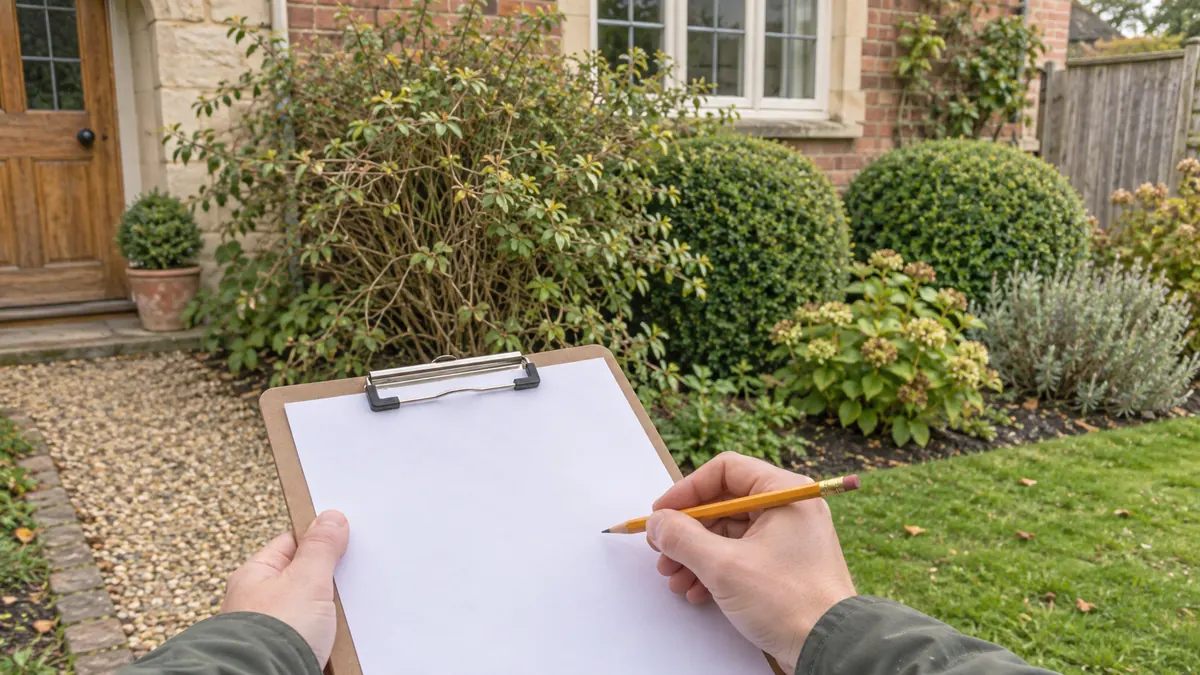
Walk-through and consultation
We walk the beds, identify each shrub, look at its condition and ask how you want it to look: natural or clipped, how tall, how far from the house. This is where we flag plants that need a different season or a different method.
Quote and schedule
You receive a quote that sets out the work bed by bed. If the plants call for more than one visit, the quote says which shrubs are done when, and why.
The work
Tarps go down first. Shrubs are thinned by hand or sheared according to the plan, dead and broken wood is removed, and tools are disinfected between properties.
Cleanup and review
Clippings are hauled away, beds are raked and hard surfaces are blown clean. We go over the result with you, and note anything to watch before the next visit.
Helpful to know in advance
What to tell us
- Roughly how many shrubs, and whether there are hedges
- How long it has been since they were last trimmed
- Any plant that did not flower this year
- Where shrubs are blocking windows, walks or views
- Gates, pets and irrigation heads we should know about
Our standard
What you can expect
- Each shrub identified before it is cut
- Timing explained, with the reason for it
- Hand pruning where the plant calls for it
- No topping of crape myrtles
- A clean site when we leave
Tell us what is growing. We will tell you when to cut it.
Send a few details about your shrubs and hedges. We start with a walk-through of the property, then write a quote for the work and the timing.